Imagine waking up in your cozy home, lights on, fridge humming, coffee brewing-without paying a single cent to the electric company.
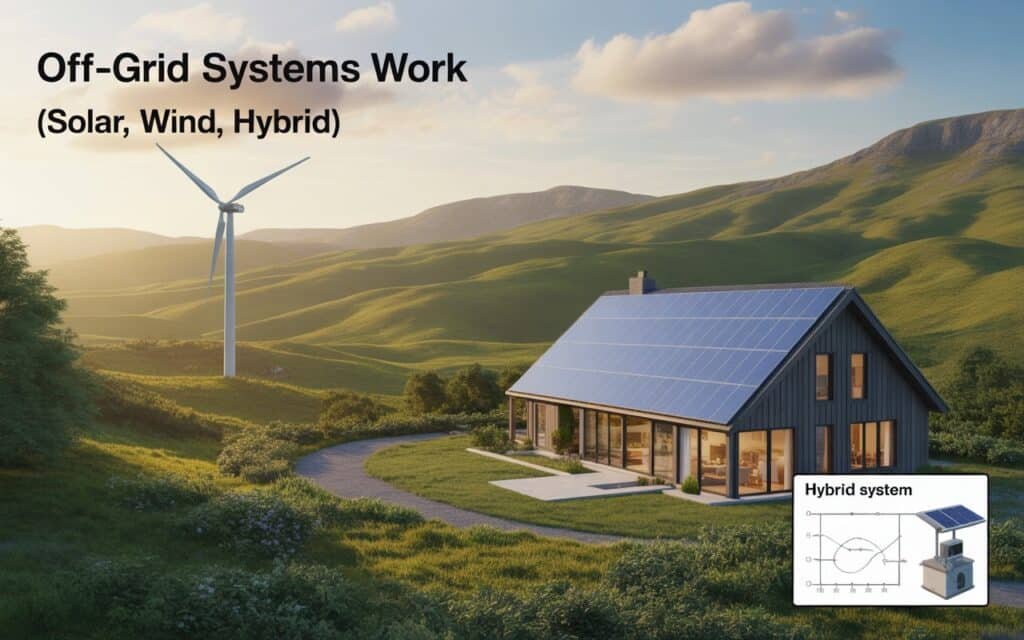
This is not a dream. This is the reality of thousands of families using off-grid hybrid systems today.
With rising utility costs, power outages, and growing awareness about climate change, more people are turning to renewable energy systems to gain freedom and reliability.
According to the International Renewable Energy Agency (IRENA), global solar capacity alone has increased by more than 22% in the last year, showing the massive shift toward clean, independent power.
In this article, you’ll discover exactly how off-grid systems work-whether solar, wind, or hybrid-and how you can harness the same technology to power your life.
For a deeper dive, check out our full guide on Off-Grid Energy Solutions to learn more about eco-friendly energy systems.
What is an Off-Grid System?
An off-grid system is an energy setup that works independently of the main electricity grid.
Not sure what powers these setups have? Check out our guide to off-grid eco generators for a simple breakdown
Instead of relying on utility companies, your home generates, stores, and manages its own power.
Unlike grid-tied systems that shut down during blackouts, off-grid hybrid systems keep running no matter what.
Whether you’re living in a remote area or just want energy independence, these systems are designed to deliver clean, reliable electricity whenever you need it.
Key highlights of an off-grid setup:
- Self-sufficient power source
- Battery storage for nights or cloudy days
- No monthly electricity bills
- Perfect for homes, farms, cabins, and even businesses in remote locations
Why Off-Grid Systems Are Gaining Popularity
There’s a reason why off-grid and renewable energy systems are no longer just for rural areas. People everywhere are adopting them because:
- Utility costs are soaring: Rates have jumped by over 15% in many states in the past two years.
- Unstable grids: Storms, heatwaves, and aging infrastructure mean more frequent blackouts.
- Environmental awareness: Households want to cut their carbon footprints and use clean energy.
- Long-term savings: Though the setup requires investment, the payoff in savings and security is massive.
Core Components of an Off-Grid Power System
Every off-grid system, whether solar, wind, or hybrid, relies on a few key parts working together to create a steady energy flow:
1. Power Source
This could be solar panels, wind turbines, or a combination of both in a hybrid setup.
2. Charge Controller
Regulates the electricity coming from the source to the batteries to avoid overcharging or system damage.
3. Battery Storage
Stores the energy you generate so you can use it anytime—especially at night or during cloudy, windless days.
4. Inverter
Converts the DC power stored in your batteries into AC power to run standard household appliances.
5. Backup Generator
Some setups include a generator for emergency situations, like prolonged cloudy weather or equipment failure.
How Off-Grid Solar Systems Work
A solar off-grid system is the most common and beginner-friendly option. Here’s how it works in simple terms:
Step-by-Step Process
- Sunlight hits the solar panels
The panels collect sunlight and convert it into direct current (DC) electricity. - The charge controller regulates the flow
This ensures safe, efficient charging of the battery bank. - Batteries store the power
Energy is stored to be used later, day or night. - An inverter converts power for your home
The inverter turns DC into alternating current (AC), the same type of electricity your appliances need.
Example Setup
Imagine a small cabin needing about 5 kWh per day. With six 400-watt panels, a 10 kWh battery, and a quality inverter, you could live comfortably without ever connecting to the main grid.
Pros of Solar Off-Grid Systems
- Easy to install and maintain
- Works well in sunny regions
- Scalable for small or large setups
How Off-Grid Wind Systems Work
Wind energy is another powerful option, especially in areas where wind speeds average above 10 mph.
Step-by-Step Process
- Wind spins the turbine blades: The kinetic energy of the wind turns the blades.
- Turbine generates electricity: A generator inside converts the spinning energy into DC electricity.
- The charge controller manages the flow: It regulates energy before it goes into the batteries.
- Battery storage holds the energy: Just like solar systems, the batteries store energy for later use.
- Inverter converts power for your needs: Converts DC to AC for lights, appliances, and other electrical needs.
Advantages of Wind Systems
- Produces energy at night and during cloudy days
- Great for areas with consistent wind patterns
- Complements solar for hybrid setups
Hybrid Off-Grid Systems: The Best of Both Worlds
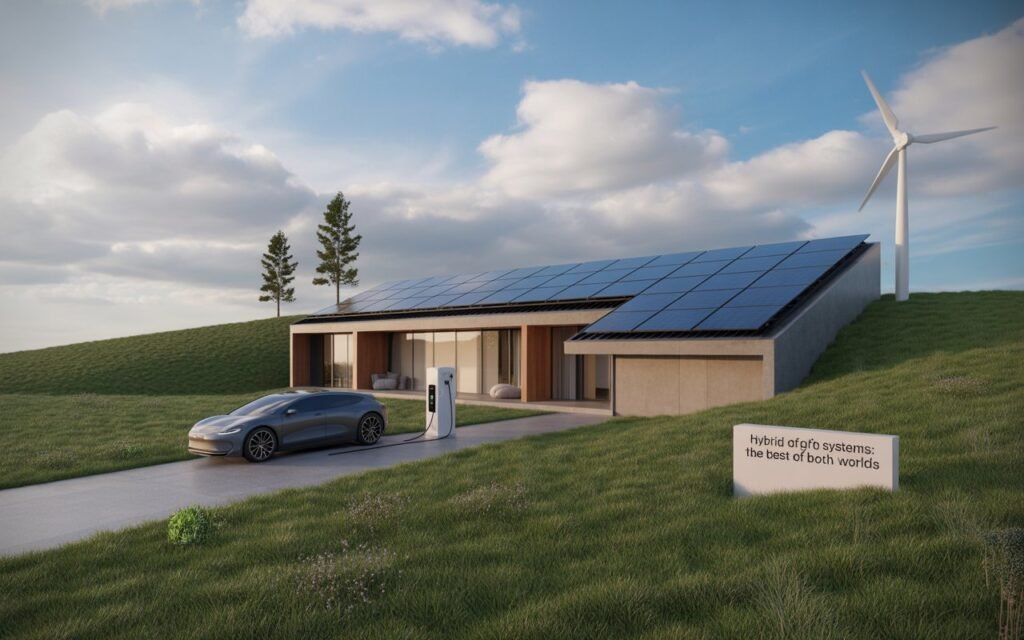
When you combine solar panels and wind turbines, you get a hybrid off-grid system—and that’s where the magic happens.
How Hybrid Systems Work
- Daytime: Solar panels generate the bulk of your energy.
- Night or cloudy weather: Wind turbines keep generating power, reducing your dependence on battery storage or backup generators.
- Energy balance: Smart controllers optimize the flow, ensuring maximum efficiency and storage.
Why Hybrid Systems Are Popular
- More consistent energy supply
- Better for areas with mixed weather conditions
- Longer battery life due to balanced charging and discharging
Real-Life Example
A family farm in Kansas runs entirely on a hybrid renewable energy system.
With 10 solar panels and a mid-sized wind turbine, they power their home, barns, and irrigation systems without relying on the grid.
Energy Storage: The Heart of Off-Grid Living
Batteries are what make living off-grid possible. Without them, you’d only have power when the sun shines or the wind blows.
Types of Batteries
- Lithium-Ion Batteries: High efficiency, longer lifespan, but more expensive.
- Lead-Acid Batteries: Affordable but need regular maintenance and have a shorter life.
- AGM and Gel Batteries: Maintenance-free but less efficient than lithium.
Sizing Your Battery Bank
To calculate the size you need:
- Figure out your daily energy use in kWh.
- Multiply by the number of days you want as backup.
- Add a buffer of 20–30% for cloudy or calm days.
Efficiency and Energy Management
Generating power is only half the story; using it wisely is where you win.
With smart planning, off-grid hybrid systems can power everything from basic lighting to heavy appliances without stress.
Tips to Maximize Efficiency
- Switch to energy-efficient appliances – LED bulbs, inverter refrigerators, and low-consumption fans help reduce demand.
- Use smart controllers – They distribute power based on priority, so essential appliances never lose energy.
- Plan usage during peak generation – Do laundry or charge devices when solar or wind generation is high.
Real Data
According to the U.S. Department of Energy, homes that upgrade to efficient appliances cut their energy needs by 20–30%, meaning smaller battery banks and less wear on your system.
Cost Breakdown and ROI
One of the biggest questions people ask is: “How much does it cost to go off-grid?”
Average Setup Costs
- Small solar-only system: $8,000-$15,000
- Mid-range hybrid system: $20,000-$40,000
- High-capacity farm or business setup: $50,000 and above
These prices include panels, turbines, batteries, inverters, controllers, and installation.
Return on Investment
- Payback period: Most systems pay for themselves in 5-10 years.
- Savings: No monthly utility bills and protection from rising energy costs.
- Incentives: Many regions offer tax credits or grants for renewable energy systems, reducing upfront costs.
Benefits of Going Off-Grid
Switching to an off-grid hybrid system is more than just an energy choice. It’s a lifestyle shift with benefits that grow over time.
1. Energy Independence
No more relying on an unstable grid or worrying about outages during storms.
2. Long-Term Savings
After the initial investment, ongoing costs are minimal, giving you financial freedom.
3. Environmental Impact
Clean energy systems help cut carbon emissions and support a healthier planet.
4. Disaster Preparedness
In emergencies, your home stays powered when others go dark.
Challenges and Practical Solutions
Off-grid living isn’t without its hurdles. Here are the most common challenges and how to overcome them:
| Challenge | Solution |
| High initial investment | Explore financing options or build the system in phases. |
| Weather dependence | Use hybrid systems to balance solar and wind; add a backup generator. |
| Maintenance | Schedule regular system checks and invest in quality components. |
| Space for equipment | Optimize design and use wall-mounted batteries or compact turbines. |
Real-Life Case Studies
Case Study 1: Off-Grid Cabin
A remote cabin in Montana uses a solar-only system with a 6-panel setup and 8 kWh of battery storage. It powers lighting, a small fridge, and basic electronics comfortably year-round.
Case Study 2: Family Farm Hybrid System
A family in Texas invested in a solar-wind hybrid system with a 10 kW solar array and a 5 kW turbine. Their monthly savings exceed $500, and they haven’t experienced an outage in three years.
Case Study 3: Off-Grid Business
A small eco-lodge in Costa Rica uses a hybrid system combined with rainwater harvesting. Their energy independence has become a selling point for eco-conscious travelers.
Choosing the Right System
Before you buy, evaluate these factors:
- Location and Climate: Sunny? Windy? Or both? Your location decides whether solar, wind, or a hybrid is ideal.
- Energy Needs: Calculate your average daily usage. Don’t forget seasonal variations.
- Budget: Start small if needed; you can always expand later.
- Future Growth: Plan for more appliances, electric vehicles, or home expansions.
Future of Off-Grid Technology
The technology behind renewable energy systems is evolving rapidly:
- Advanced Batteries: Solid-state and saltwater batteries promise higher efficiency and safety.
- AI-Powered Energy Management: Systems that learn your habits to optimize generation, storage, and usage.
- Community Microgrids: Shared hybrid systems that support entire neighborhoods or villages.
Conclusion
Living off-grid is no longer just for survivalists or remote cabins in the woods.
With modern off-grid hybrid systems, anyone can enjoy reliable power, long-term savings, and the satisfaction of knowing you’re helping the planet.
Whether you choose solar, wind, or a hybrid setup, one thing is certain: energy independence is the future.
Explore our Off-Grid Energy Solutions to plan the perfect eco-friendly power system for your home or business.
FAQs
How much does an off-grid system cost?
Small setups start around $8,000, while advanced hybrid systems can cost $20,000 or more. Incentives and financing can help reduce upfront costs.
How many solar panels do I need for my home?
A typical home uses 10–20 panels depending on location, energy usage, and panel size.
What’s the best battery for off-grid systems?
Lithium-ion batteries are the most efficient and long-lasting, though lead-acid batteries are cheaper for smaller setups.
Can I run air conditioning with an off-grid system?
Yes, but you’ll need a system with higher capacity and efficient appliances to manage the load.
How long do off-grid batteries last?
Lithium batteries last 10-15 years, while lead-acid options last 3–7 years with proper maintenance.